Bedding · Fabric Guide
Coyuchi Organic Cotton Layers: Weave, Weight, and Care
A cotton blanket can look straightforward from across the room. Up close, its weave, surface, and weight tell a more particular story: whether it will feel airy or plush, lie flat or gather into soft folds, and suit a warm bedroom or a cool evening. Understanding those details makes choosing a layer less like guessing and more like knowing what you want it to do.
Published October 19, 2026
There is a moment, usually in the middle of the night, when bedding ceases to be an arrangement and becomes a practical matter. The room is cooler than it was at bedtime; a sheet has migrated; a blanket is either too much or not quite enough. A good layer answers this small domestic question without making a spectacle of itself. Its usefulness depends not only on the fiber named on the label, but on how that fiber has been woven, finished, and weighted.
Organic cotton is often described through its origin, and origin matters. But the hand of a blanket—the way it bends over a mattress, settles around a shoulder, or feels against the skin—is also shaped by construction. A honeycomb weave behaves differently from chenille. A brushed surface has a different character from a smooth, tightly structured cloth. These are not merely decorative distinctions. They influence airflow, texture, warmth, drape, and the ordinary question of whether a blanket is pleasant to wash and put back into use.
This guide considers those differences through the lens of Coyuchi organic cotton layers. The aim is not to declare one weave universally superior. It is to give each its proper temperament, so that a choice can be made with the room, the season, and the household routine in mind.
The quiet mechanics of a weave
Weave is the pattern in which yarns cross one another to make cloth. In a bedding layer, the pattern affects both appearance and performance. Some weaves leave more space in the fabric; others create a denser, flatter surface. The difference can be felt as softness, loft, crispness, or weight, and often seen as texture before it is understood as structure.
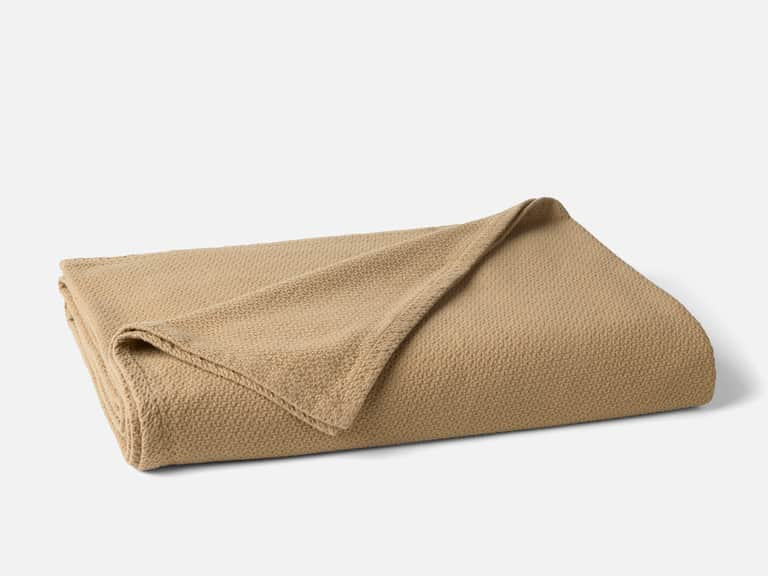
A honeycomb weave, as its name suggests, forms a repeated cellular pattern. Its small raised and recessed areas give the surface dimension without requiring a heavy pile. In the Coyuchi Classic Organic Blanket, the honeycomb structure is paired with 100% organic cotton and a lightweight, breathable construction. The result is a layer with visible texture and a relatively open, uncomplicated feel: a useful option for someone who wants more substance than a sheet but not the enveloping heft of a winter blanket.
Those little cells are not simply ornament. The relief gives the blanket a tactile presence while allowing it to remain comparatively light. It can sit neatly over a sheet, add a modest degree of warmth, and bring a little pattern to otherwise plain bedding. In a room where the bed is made with smooth cotton sheets and a quiet palette, the texture supplies interest without insisting on a new color story.
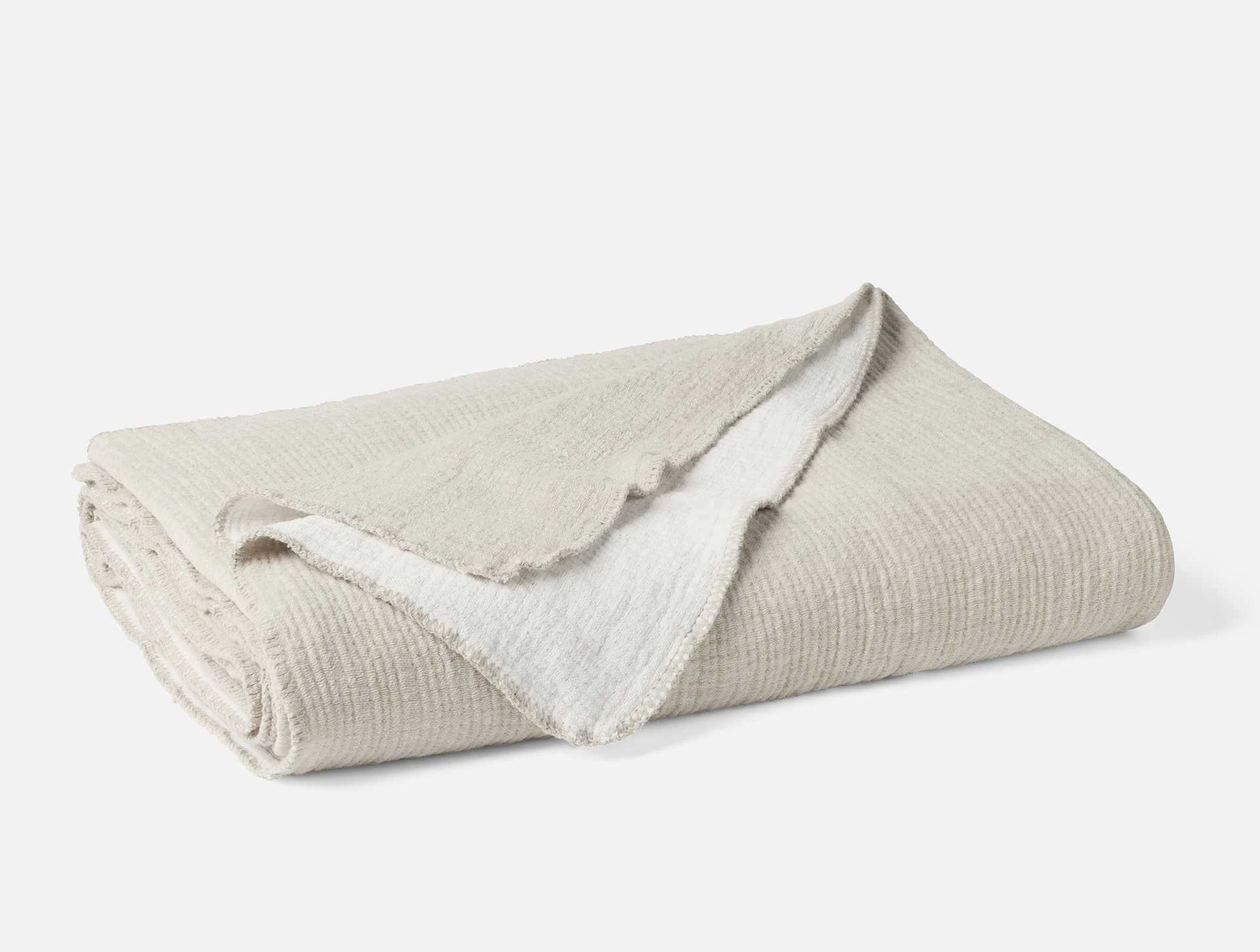
Chenille takes a different route. The yarn has a soft, velvety surface that gives the cloth a plush hand, even when the finished layer is intended to be lightweight. The Coyuchi Cozy Cotton Organic Blanket is made with organic cotton chenille yarn. Its washed finish creates a gently puckered texture, and its color-matched blanket stitching gives the edges a visible, informal finish. The blanket reverses to soft white, making it possible to change the appearance of the bed without changing the layer itself.
Chenille tends to read as more tactile than honeycomb. It invites the hand; honeycomb is more likely to catch the eye. That distinction is useful when deciding where a blanket will live. A chenille layer may feel especially at home folded across a bed or draped over a reading chair, where its softness can be appreciated at close range. A honeycomb layer, with its architectural pattern, can look composed and tidy even when it is doing the less glamorous work of keeping a sleeper comfortable.
Weight is not the same as warmth
It is tempting to use weight as a shortcut for warmth: the heavier the blanket, the warmer it must be. The relationship is real but not absolute. Fiber, weave, room temperature, airflow, and the way a person sleeps all affect how a layer feels. A dense blanket can hold more warmth, but an airy structure may be comfortable in a room that fluctuates through the night. A soft surface can feel cozy to the touch without making the entire bed hot.
Fabric weight is often expressed in grams per square meter, or GSM. The figure can help compare fabrics, but it is not a complete description of comfort. A blanket’s size and construction matter too: a broad, open weave may drape differently from a compact fabric at the same weight. Product descriptions do not always provide a GSM figure, so the words “lightweight,” “plush,” or “breathable” should be read alongside the fiber and weave rather than as precise measurements.
For year-round bedding, the practical question is usually not “How warm is this blanket in the abstract?” but “How will it work with the other layers I already use?” A lightweight cotton blanket can be placed over a sheet in mild weather and paired with a warmer cover when the temperature falls. Layering gives the sleeper options: one can remove or add a single piece instead of asking one thick cover to perform in every season.
Honeycomb cotton is often a sensible choice for this adjustable approach. Its textured structure adds a layer of air and a little visual depth, while its lightweight character makes it easier to use through changing conditions. Chenille, with its plush hand, may feel more comforting on contact and can add softness to a bed whose other textiles are smooth. Neither texture guarantees a particular sleeping temperature; the room and the person in it remain part of the calculation.
Drape is another useful clue. A blanket with an easy, fluid fall tends to settle softly over the bed and can be folded without creating a rigid ridge. A more structured textile may hold its shape and make a cleaner edge. If a layer is meant to be pulled up at night, softness and flexibility may matter most. If it is primarily a finishing layer, the way it lies across the bed may carry more weight.
Matching texture to the room
A simple bedding arrangement benefits from contrast, though not necessarily from color. If the sheets are smooth, a raised weave adds dimension. If a quilt or coverlet already has a pronounced pattern, a quieter cotton layer may allow the bed to rest. This is the modest art of texture: enough variation to make the arrangement feel considered, not so much that every surface competes for attention.
The honeycomb weave of the Classic Organic Blanket can suit a restrained bedroom particularly well. Its repeated pattern offers detail at close range, while its cotton construction and clean mitered hem keep the overall impression orderly. It is available as an organic cotton layer grown and woven in India; its description notes GOTS certification and production in a Fair Trade Certified factory. Such information can help readers understand sourcing and production standards, though it should be considered separately from the question of how the blanket feels in a particular room.
The Cozy Cotton Organic Blanket presents a softer, more relaxed alternative. Its chenille surface and washed, puckered finish give it a lived-in quality. The reversible soft-white side makes it adaptable to a bed that needs a lighter-looking layer, or to a room where a second surface is welcome. Its edge stitching is part of its character rather than an attempt to disappear into the fabric.
Color also changes the impression of texture. A pale shade can make the ridges of a weave appear subtle and calm; a deeper tone may emphasize the pattern and give the bed a more grounded look. The best test is not whether a blanket matches every other textile exactly, but whether its color and surface sit comfortably beside them. A little tonal variation usually feels more natural than a room in which every item seems to have been issued the same instruction.
Cotton and breathability
Cotton is valued in bedding for its familiar, breathable feel and its ability to be made into fabrics ranging from crisp and smooth to nubby and plush. But “cotton” is not a promise that every blanket will feel alike. Yarn size, weave density, finishing, and pile all influence how a fabric handles heat and moisture. The word identifies a fiber; the construction gives it a personality.
That distinction is especially helpful for people who tend to get warm at night. A lightweight, textured cotton layer may be easier to adjust than a dense cover. A breathable textile can be a useful part of a comfortable bed, but it cannot guarantee a particular sleep temperature; room conditions, mattress materials, sleepwear, and personal preference matter as well. If overheating is a recurring problem, begin by simplifying the layers and adding them back one at a time. Bedding is easier to judge when it is not being asked to solve five problems at once.
For a bed shared by sleepers with different temperature preferences, separate, lighter layers can be more practical than one imposing blanket. Each person can adjust coverage without rearranging the entire bed. A cotton layer is also easy to fold at the foot of the bed or remove when the room warms. These small accommodations tend to matter more over time than an elaborate bedding scheme that works only under ideal conditions.
Care that preserves the fabric
Care instructions are part of the selection, not a footnote to be discovered after the first wash. A blanket that feels perfect but is difficult to maintain may not suit a busy household. Conversely, a washable layer that can be returned to regular rotation without elaborate precautions can earn its place through sheer reliability.
The Classic Organic Blanket is listed as machine washable, with cold water on a gentle cycle and tumble drying on low. The Cozy Cotton Organic Blanket calls for a cold, gentle wash with like colors, followed by low tumble drying; the instructions also recommend removing it promptly and allow for a warm iron if desired. These are product-specific directions, and the care label on the item should take precedence if it differs from general advice.
Cold water and a gentle cycle are often useful starting points for cotton bedding because they reduce unnecessary agitation and help maintain the fabric’s appearance. Use a detergent appropriate for the textile and avoid overloading the machine: a blanket needs room to move through the wash. If the drum is too crowded, rinsing and drying can become uneven, and the load may be harder on both the fabric and the appliance.
Drying deserves a little attention. Low heat is specified for these layers, and prompt removal can help limit excessive creasing. When practical, shake the blanket out before drying or after the cycle ends so it does not remain compressed in a heap. Do not assume that a higher dryer setting will save time without consequence; heat can contribute to shrinkage or wear. The aim is a dry textile, not an emergency speed trial.
Chenille’s plush surface benefits from considerate handling. Avoid harsh treatment that could disturb the yarn’s soft texture, and follow the care directions rather than improvising with bleach or fabric softener. For a new blanket, washing it separately or with similar colors can be prudent, particularly if the shade is deep. After washing, return it to the bed only when thoroughly dry.
Storage matters too. Before putting a seasonal layer away, make sure it is clean and completely dry. Fold it loosely and store it in a clean, dry place, rather than sealing it away while damp. A cotton blanket that remains in regular use may need little more than sensible washing and a place to rest between seasons. Care, at its best, is not a ritual performed for its own sake; it is a way to keep a useful object useful.
A practical way to choose
Start with the room. Is it warm most of the year, or does it become cool at night? Does the bed already have a quilt or duvet? A lightweight cotton layer can be valuable where temperatures vary, particularly when it can be added or removed independently. If the room runs cold, a cotton blanket may still serve as a comfortable layer, but it may need to work alongside a warmer cover.
Next, think about touch. Choose honeycomb if a defined, breathable texture and a more composed appearance appeal to you. Choose chenille if a plush surface and relaxed finish sound more inviting. This is not a technical contest; the correct answer may be whichever blanket you reach for without thinking.
Then consider use and maintenance. Will the blanket be on the bed every night, thrown over a sofa, or reserved for guests? Frequent use makes easy washing particularly valuable. A layer that is machine washable can be simpler to keep in circulation, provided its care instructions suit the household’s laundry routine. Check the finished dimensions, too: a blanket should cover the area you expect it to cover, whether that means a narrow strip at the foot of the bed or a generous layer across the mattress.
- For a light, textured bed layer: consider a honeycomb cotton weave and check whether its weight and dimensions fit your existing bedding.
- For a softer, more tactile surface: look for chenille or another plush finish, while confirming the specific washing instructions.
- For changing temperatures: build a flexible arrangement with separate layers rather than relying on one blanket to serve every season.
- For a quieter visual effect: pair a pronounced weave with smooth sheets and keep the rest of the bed relatively simple.
- For easier upkeep: read the care label before buying and choose a routine you can realistically maintain.
The case for the well-chosen layer
Good bedding rarely announces itself. It is noticed instead in small efficiencies: a bed that can be adjusted without fuss, a fabric that feels pleasant against the skin, a blanket that looks at ease with the room rather than newly imported from a catalogue. Weave and weight are useful because they explain some of those impressions. Honeycomb offers structure and an airy kind of texture; chenille brings softness and a more substantial hand; finishing details influence the drape and the everyday experience of care.
Organic cotton layers are most rewarding when selected for their actual role. A breathable blanket does not have to be the warmest thing in the room. A plush one need not be reserved for winter. A textured weave can be both decorative and practical. Once the distinctions are clear, choosing becomes less about chasing an ideal textile and more about matching a fabric to a room, a routine, and the particular hour when another layer seems like a good idea.
The sensible approach is also the simplest: consider the weave, notice the weight and hand, read the care directions, and imagine the blanket in use rather than merely folded on a shelf. A layer that performs comfortably and is easy to live with has already done much of its work. The rest is a matter of making room for it on the bed.