Bedding & Home Textiles
Choosing a DownTown Company Throw: Cotton Herringbone or Baby Alpaca?
A throw is a small domestic decision with a surprisingly long life. It may spend the morning folded at the foot of a bed, the afternoon over the arm of a chair, and the evening drawn across a lap while the room cools. DownTown Company’s cotton herringbone and baby alpaca options answer that familiar need in distinctly different ways: one with the breathable practicality of long-staple cotton, the other with the light, enveloping warmth of alpaca.
Published November 4, 2026
Two throws, two kinds of comfort
Choosing between the two is less a matter of deciding which fiber is universally better than of noticing what you want a throw to do. Cotton herringbone is an easygoing layer: breathable, smooth, and washable, with a familiar woven texture and a pattern that brings quiet definition to a room. Baby alpaca is more insulating and noticeably softer in character, with a lightness that can make its warmth feel almost surprising. It is the choice for someone who wants a wraparound layer and is willing to give it more careful attention.
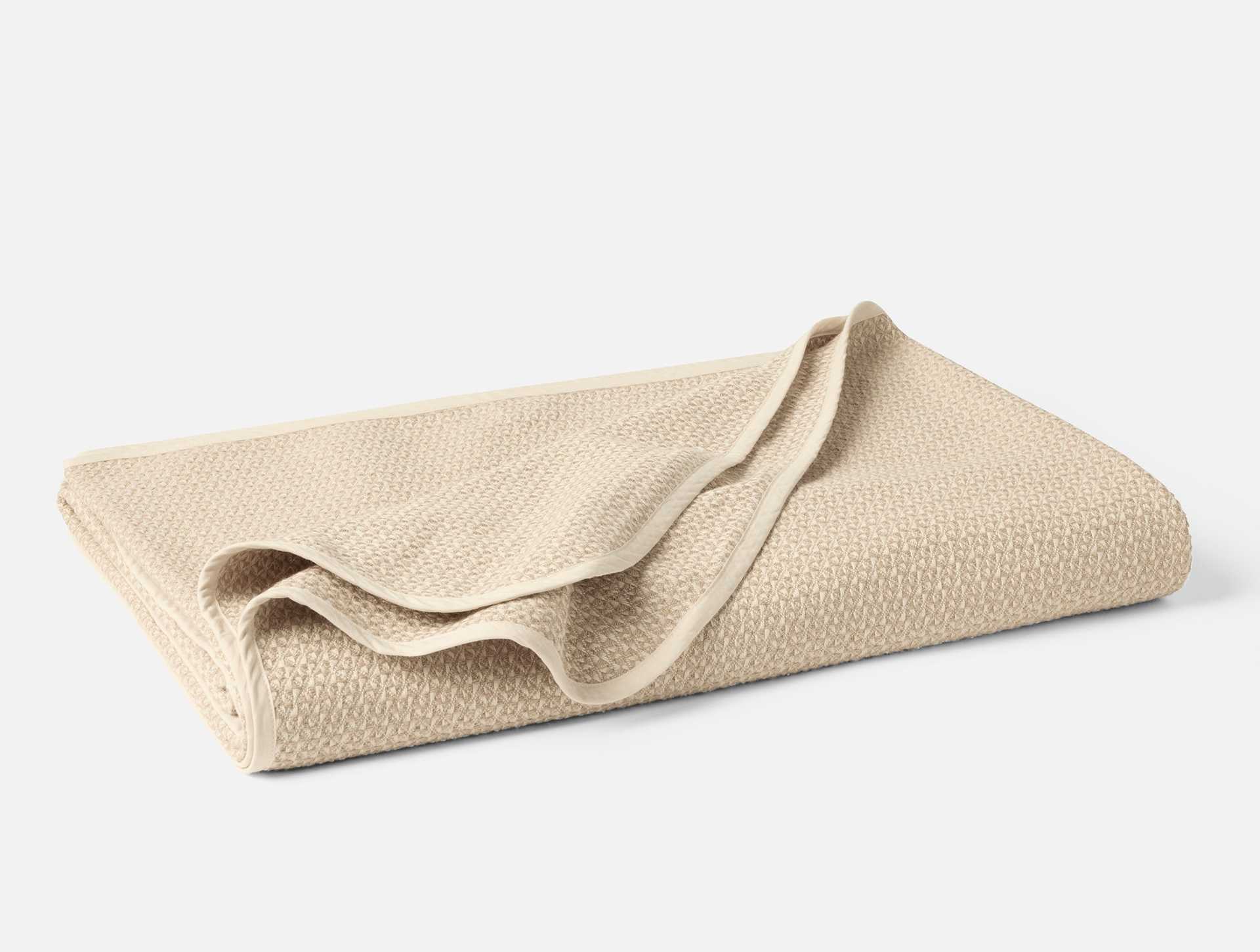
DownTown Company’s Classic Herringbone blankets and throws are woven in Portugal from 100% long-staple cotton. The herringbone pattern—a repeated zigzag formed by the weave—adds interest without making the blanket visually busy. The throws measure 50 by 70 inches and have softly fringed ends; the larger blankets come in bed sizes and use a tailored self-hem. They are washable and made with low-impact dyes, according to the product information.
The company’s baby alpaca throws are made from 100% baby alpaca and measure 50 by 70 inches. They have a lightweight, naturally insulating feel and are finished with fringe. The colors include charcoal, walnut, light grey, sea glass, burgundy, blue, and paprika. Their care instructions are dry clean only. The words “baby alpaca” refer to a grade of fiber, not necessarily to fiber shorn from a baby alpaca; the important practical distinction here is the resulting softness and the handling the finished textile requires.
Both throws occupy the same general territory: the sofa, a reading chair, a guest bed, the familiar reach between sitting down and realizing the room is cooler than expected. But their different fibers, textures, and care routines make them suited to different households and habits.
Cotton herringbone: texture without ceremony
Cotton has a way of fitting into a room without asking for special treatment. Long-staple cotton fibers are comparatively long, helping produce a smooth yarn and a textile with a clean, even hand. In the herringbone throw, the weave itself supplies the character. The pattern catches the eye when light falls across it, then recedes when the room is taken in as a whole. It can sit comfortably among plain bedding, patterned cushions, or a sofa whose upholstery already has enough to say.
For everyday use, the cotton throw’s main advantage is not that it is indestructible, but that it is straightforward. Its washable construction suits the rhythms of a busy living room, where a throw may be used often, folded imperfectly, and occasionally carried from one room to another. A washable textile is often the more practical choice for a household with frequent visitors, children, or pets, though specific washing directions should always be checked before laundering.
Cotton is also a useful option for people who want a layer without substantial insulation. It is generally more breathable than a dense, heavily insulating wrap, making a cotton throw comfortable when the room is only mildly cool or when the user tends to warm up quickly. That does not mean cotton cannot feel cozy. Weight, weave, and the number of layers all matter. It simply means that a cotton herringbone throw is less likely to feel like a compact cocoon than a plush, insulating fiber.
The aesthetic is equally practical. Herringbone is a classic pattern, but its geometry is restrained: the zigzag is clear at close range and pleasantly understated from across the room. The fringe softens the outline, while the cotton weave keeps the overall effect relaxed rather than formal. Draped over a chair or folded at the end of a bed, it adds texture without requiring the rest of the room to be arranged around it.
That ease makes cotton a good everyday companion. It is especially appealing when the throw will be used frequently and washed periodically, or when several people will share it. Cotton may also suit a warmer climate, a heated home, or a person who wants the comfort of a blanket but dislikes excessive warmth. If your ideal throw is the one you can pick up without thinking about the season, the cotton option has a persuasive case.
Baby alpaca: lightness with insulation
Baby alpaca offers a different sensory proposition. Its appeal is the balance between warmth and a relatively light feel. Where a cotton throw can seem breathable and crisp, alpaca has a softer, more enveloping character. It is well suited to a reading chair near a drafty window, a cool bedroom, or the end of an evening when a lighter layer no longer feels sufficient. The throw is not described as heavy, but its natural insulation gives it a more comforting presence.
“Warm” is an imprecise word in bedding, because people experience temperature differently. A person who is always reaching for another layer may welcome alpaca’s insulation; someone who overheats easily may prefer the more open, casual feel of cotton. The shape of the use matters too. A throw placed over the shoulders while reading behaves differently from one folded across the feet at bedtime. Alpaca’s softness and insulating qualities are most useful when the throw is meant to do more than provide a decorative accent.
The material also brings a distinct visual texture. Baby alpaca throws are offered in a palette that includes both neutral shades and richer colors, from charcoal and light grey to burgundy, blue, sea glass, and paprika. Fringe gives the edges a relaxed finish. Because the fiber itself is the central feature, the throw can create a sense of depth even in a simple room: on a plain chair, over a smooth bed cover, or alongside cotton and linen textiles.
That softness comes with a care commitment. The product information specifies dry cleaning only. For some homes, this is a small trade-off for a particularly soft, warm layer; for others, it is the deciding factor. Before choosing alpaca, consider where it will live and how often it will be used. A throw reserved for reading or occasional lounging may need cleaning less frequently than one used daily by several people. Regular airing and careful storage can help keep a textile fresh between cleanings, while always following the manufacturer’s instructions.
Alpaca is therefore a good fit for someone who values tactile comfort and warmth more than easy laundering. It may be especially satisfying as a personal throw rather than the household’s all-purpose blanket: something kept in a favorite chair, handled with a little care, and brought out when the weather or mood calls for it.
A practical comparison
It helps to compare the throws by the questions that matter after the first impression. The following overview summarizes the distinctions described in the product information; exact feel will still depend on the individual textile and the person using it.
| Consideration | Cotton herringbone | Baby alpaca |
|---|---|---|
| Fiber | 100% long-staple cotton | 100% baby alpaca |
| Texture and appearance | Breathable woven surface with a classic zigzag pattern and fringe | Exceptionally soft, lightweight feel with fringe and a range of colors |
| Warmth | Versatile, comparatively breathable comfort | More insulating warmth without a heavy feel |
| Care | Washable; follow the specific care label | Dry clean only |
| Throw dimensions | 50 × 70 inches | 50 × 70 inches |
| Best suited to | Frequent use, easy care, and a lighter everyday layer | Extra softness, greater insulation, and more careful upkeep |
The table makes the choice appear tidy. Real life is not always so obliging. A washable cotton throw may still be less convenient if a household dislikes doing laundry; dry-clean-only alpaca may be perfectly manageable if it is used sparingly. Likewise, a person’s sense of warmth may outweigh general expectations about fiber. Consider your own routines first, then use material characteristics as a guide rather than a verdict.
Think about where the throw will live
On a sofa
A sofa throw is often both a useful layer and an object in the room. Cotton herringbone suits a high-traffic sofa because it is washable and its pattern gives a casual drape a little structure. Fold it over the back or arm, or keep it within reach at the end of the sofa. Baby alpaca makes more sense if the sofa is a quiet retreat and the main goal is warmth and softness. In a busy household, you may want to think carefully about spills, frequent handling, and the dry-clean-only requirement before making alpaca the everyday choice.
On a reading chair
The chair is a natural home for a personal throw. If you read for long stretches or sit in a cool corner, baby alpaca’s insulating feel may be welcome. Its lightweight warmth is particularly useful when a bulky blanket would feel awkward around the shoulders. If the chair is used throughout the day and by different people, cotton may be the more uncomplicated choice. The two throws serve slightly different moods: cotton is ready for use; alpaca invites you to settle in.
At the foot of a bed
Both options can add a finishing layer to a bed, but their visual effects differ. Herringbone introduces a discreet pattern and a tailored, familiar texture. Alpaca brings a softer surface and can make a bed feel more inviting without adding a heavy-looking layer. For a throw that will be folded decoratively and used only now and then, alpaca’s special care may pose little inconvenience. If it is likely to be pulled over the bed every night, washable cotton may be the more practical choice.
In a guest room
A guest-room throw should be easy to understand and comfortable for a range of visitors. Cotton is a dependable general-purpose option, especially when you want a blanket that can be washed between stays. Alpaca offers a more luxurious-feeling layer for a carefully kept room, but its care instructions are worth considering if the throw will be handled by many guests. Whichever you choose, leave it somewhere obvious and accessible rather than treating it as an untouchable decoration.
Care is part of the decision
Material choice is often discussed in terms of softness and warmth, while care is treated as an afterthought. In practice, care determines how easily a textile fits into a household. A throw that feels perfect but is inconvenient to maintain may be used less often than expected. A simpler, washable option may earn its place through repetition, becoming the blanket that is always at hand.
For cotton herringbone, check the care label before washing and avoid assuming that all cotton textiles should be treated identically. Use a suitable cycle and detergent, and do not overload the machine. Allowing enough room in the wash can help fabrics rinse properly and reduce unnecessary abrasion. If the throw has fringe, handle the edges thoughtfully and follow any specific directions from the maker.
For baby alpaca, the stated recommendation is dry cleaning. That instruction should guide the decision from the beginning, not arrive as a surprise after a spill. Keep the throw away from food and drink when possible, and store it clean and dry when it is not in use. Natural-fiber textiles can benefit from sensible protection against pests during longer periods in storage. Avoid applying improvised treatments that could damage the fiber.
Neither material is maintenance-free. Washable does not mean indestructible, and delicate does not mean impractical. The better question is whether the expected care feels reasonable in your home. If you prefer to wash blankets as part of routine laundry, cotton is likely to fit your habits. If you are comfortable reserving a soft, special-feeling throw for more careful use, alpaca may feel worth the extra attention.
How to make the final choice
Before deciding, picture the throw in its real setting rather than in an idealized room. Is it going to be used every evening, or mostly folded at the end of the bed? Will it be shared? Is the room usually warm, or does it turn chilly after sunset? How often are you willing to arrange specialist cleaning? Clear answers to those questions often settle the matter more quickly than a long comparison of fiber terminology.
- Choose cotton herringbone if you want a breathable, washable layer for frequent use and appreciate a classic woven pattern.
- Choose baby alpaca if softness and greater insulation are priorities, and dry-clean-only care fits your routine.
- Consider the room temperature if you tend to overheat or want only a light cover; a more breathable cotton throw may suit you better.
- Think about who will use it if the throw will be shared widely or used in a busy space. Ease of care can become especially valuable.
- Look at the rest of the room if the throw is also a design choice. Herringbone adds a quiet graphic pattern; alpaca contributes softness, color, and a more enveloping texture.
There is no need to make the decision a contest between a humble fiber and a luxurious one. Cotton is not merely the practical alternative, and alpaca is not simply a decorative indulgence. Each offers a different relationship between comfort and care. One is built around easy versatility; the other around light, concentrated warmth and a particularly soft hand.
The useful throw is the one you reach for
A throw’s success is measured less by the way it looks when perfectly folded than by how often it becomes part of ordinary life. DownTown Company’s cotton herringbone throw is a strong choice for households that want a breathable, washable textile with a classic pattern and an uncomplicated role. The baby alpaca throw is better suited to those seeking a softer, more insulating layer and prepared to follow its dry-clean-only care guidance.
In a room that changes temperature through the day, either can make the evening more comfortable. The difference is in the sort of comfort each provides: cotton’s easy, breathable familiarity or alpaca’s lighter-than-expected warmth. Choose for the chair you actually sit in, the climate you actually live with, and the care routine you are actually willing to maintain. A good throw does not demand much attention. It simply waits nearby, then proves useful.